
How Replacement Theology Contributed to Antisemitism


Replacement theology is the belief that the church has replaced Israel as the people of God.
In its strongest form, it teaches that the Jewish people lost their covenant standing because they rejected Yeshua, that the promises once given to Israel now belong exclusively to the church, and that Jewish life after the first century has little continuing place in God’s purposes.
Christians have expressed these ideas in different ways, and not every theology of the church and Israel leads directly to hostility toward Jews. Some Christian traditions use the term fulfillment rather than replacement and attempt to preserve the continuing significance of Israel.
History nevertheless shows that replacement theology has often been taught in ways that encouraged contempt.
When Christians believed that the church had inherited Israel’s blessings while the Jewish people retained only judgment, Jewish suffering could be interpreted as proof of divine rejection. When Jewish communities continued to preserve their faith, identity, and Scriptures, that survival could be treated as stubborn resistance to God.
These assumptions shaped Christian preaching, church policy, civil law, religious art, public rituals, and everyday attitudes toward Jewish neighbors.
Replacement theology did not create every form of antisemitism. Modern racial, political, nationalist, and conspiratorial antisemitism developed through additional forces. Yet centuries of Christian teaching helped prepare the ground on which later hatred grew.
What Is Replacement Theology?
Replacement theology is commonly associated with the term supersessionism.
The word comes from the idea that one thing has been superseded, displaced, or made obsolete by another. In Christian theology, it usually refers to the belief that the church has taken Israel’s former place in God’s covenant purposes.
The term covers several positions.
Some Christians believe that the promises to Israel reach their fulfillment in Messiah and are extended to a multinational community of Jewish and Gentile believers. Others make the much stronger claim that ethnic Israel has been rejected and replaced by a new, entirely non-Jewish people of God.
The second form has caused the greatest damage.
It creates a simple transfer:
Israel was chosen, but now the church is chosen.
Israel received the covenant, but now the church owns the covenant.
Israel received the promises, but now the church possesses the promises.
Israel had a calling, but now that calling belongs to someone else.
Within this framework, living Jewish people become difficult to explain. They continue to exist after their supposed theological role has ended.
Rather than causing Christians to reconsider the framework, Jewish survival was often interpreted as defiance.
A Necessary Theological Distinction
Christians believe that Yeshua fulfills Israel’s Scriptures and that Gentiles are welcomed into the people of God through Him.
Those convictions do not require the conclusion that God has rejected the Jewish people.
The New Testament presents Gentile inclusion as an act of mercy rooted in Israel’s covenant story. Gentiles are brought near to the God of Israel. They receive the blessings promised through Abraham. They worship Israel’s Messiah and read Israel’s Scriptures.
Paul does not describe this inclusion as Gentiles taking possession of a dead tree.
In Romans 11, he compares Israel to a cultivated olive tree. Gentile believers are wild branches grafted into it. They share in the nourishing root, but Paul warns them not to boast over the natural branches.
The image communicates dependence and humility.
Replacement theology reverses that posture. It allows the grafted branches to imagine that they planted the tree, own the root, and may speak contemptuously about the people through whom the covenant story came.
“Has God Rejected His People?”
Paul asks the question directly in Romans 11:
“I ask, then, has God rejected his people? By no means!”—Romans 11:1, NRSVUE
Paul identifies himself as an Israelite, a descendant of Abraham, and a member of the tribe of Benjamin. His own Jewish identity serves as part of his answer.
He later warns Gentile believers:
“Do not boast over the branches. If you do boast, remember: you do not support the root, but the root supports you.”—Romans 11:18, NRSVUE
Paul’s argument contains judgment, mercy, mystery, and hope. It does not offer an easy theology in which Israel disappears and the Gentile church quietly assumes ownership of everything.
He concludes that God’s gifts and calling are irrevocable.
Replacement theology often reduced this complex discussion to a story of rejection and transfer. The result was precisely the Gentile arrogance Paul warned against.
How the Early Separation Developed
The first followers of Yeshua were Jewish.
They worshiped the God of Israel, read the Torah and the Prophets, participated in Jewish communal life, and understood Yeshua within Israel’s messianic hope.
Gentiles soon began joining the movement in significant numbers. The question addressed in Acts 15 was whether these Gentile believers needed to become Jews in order to belong.
The Jerusalem Council did not require Gentile conversion to Judaism. This decision allowed a multinational messianic community to grow.
Over time, the movement became increasingly Gentile. Historical conflicts, social pressures, political changes, and debates about Yeshua widened the separation between the developing church and Jewish communities.
As Gentile Christians became the majority, they sometimes read the New Testament’s internal Jewish disputes as conflicts between two completely separate religions.
Yeshua’s arguments with particular Jewish leaders became “Christianity against Judaism.” Prophetic rebuke directed within Israel’s covenant life became proof that Jewish people as a whole were rejected.
The Jewish setting of the New Testament gradually faded from Christian awareness.
The Destruction of Jerusalem as Proof of Rejection
Jerusalem and the Second Temple were destroyed by Roman forces in AD 70.
Later Christian interpreters frequently treated this catastrophe as visible proof that God had rejected the Jewish people for refusing Yeshua.
The destruction was presented as a permanent theological verdict.
This reading shaped how Christians interpreted later Jewish suffering. Exile, vulnerability, poverty, exclusion, and persecution could all be described as evidence that the Jewish people remained under divine judgment.
The logic was circular and cruel.
Christians helped create conditions of Jewish suffering, then pointed to that suffering as proof that God had rejected the Jews.
Jewish hardship became a theological exhibit.
This allowed Christians to observe injustice without questioning their own responsibility. If Jewish humiliation reflected God’s will, defending Jewish neighbors might even appear to resist divine judgment.
The Church as the “True Israel”
Christian writers increasingly described the church as the true, spiritual, or new Israel.
This language could express a belief that Gentile believers had been joined to Israel’s covenant blessings through Messiah. Yet it often moved beyond inclusion into displacement.
The church became Israel in every positive sense.
Biblical promises of election, blessing, holiness, priesthood, and inheritance were applied to Christians. Biblical warnings, judgments, and curses continued to be applied to Jews.
The arrangement was remarkably convenient.
The church inherited Jerusalem, Abraham, the prophets, the Psalms, the covenants, and the promises. Living Jewish people inherited blindness, exile, guilt, and punishment.
Such interpretation allowed Christians to claim Israel’s Scriptures while rejecting Israel’s descendants.
The Jewish people became useful mainly as negative witnesses. Their continued existence supposedly proved what happened to those who refused Christian truth.
Augustine and the “Witness People”
Augustine of Hippo developed an influential understanding of Jewish survival.
He opposed killing Jews and argued that they should continue to exist within Christian society. Their Scriptures testified to Christian claims about Yeshua, while their dispersed and subordinate condition was interpreted as evidence of judgment.
This view sometimes offered Jews a degree of protection against destruction.
It also assigned them a humiliating theological role.
Jewish people were to survive, but often in a visibly inferior condition. Their continued existence served Christian purposes. They preserved Scripture for the church and demonstrated the consequences of unbelief.
Protection based on permanent subordination is a deeply limited form of protection.
The witness theory could restrain some violence while reinforcing the idea that Jewish humiliation belonged within a Christian social order.
How Replacement Theology Shaped Preaching
Christian preaching carried these ideas into congregational life.
Sermons contrasted a faithful church with a faithless Israel. Jewish characters were used as symbols of legalism, blindness, hard-heartedness, greed, hypocrisy, or hostility toward God.
The phrase “the Jews” could be repeated without explaining that Yeshua, His disciples, His mother, Paul, and the earliest believers were themselves Jewish.
Gospel conflicts involving particular authorities were expanded into accusations against an entire people.
Passion preaching was especially dangerous.
Congregations heard that “the Jews” rejected, betrayed, and killed Christ. Listeners were rarely taught to distinguish between certain leaders, a particular crowd, Roman authority, and the Jewish people as a whole.
The result was inherited collective guilt.
Jewish people living centuries later could be treated as participants in the crucifixion simply because they were Jewish.
During Holy Week, this preaching sometimes contributed to intimidation and violence against nearby Jewish communities.
Blessings for the Church, Curses for the Jews
Replacement teaching also shaped how Christians divided biblical promises.
Passages about Israel’s restoration, blessing, land, redemption, and future hope were spiritualized and transferred to the church.
Passages about judgment, rebellion, exile, and punishment were read more literally and left attached to the Jewish people.
This unequal method allowed the church to receive every honor while assigning every failure elsewhere.
It also obscured the prophetic message.
Israel’s prophets announced severe judgment, but they also proclaimed return, restoration, renewed covenant life, the gathering of the scattered, and God’s enduring faithfulness.
The prophets did not present Israel’s punishment as the cancellation of God’s purposes.
When the church claimed the promises while leaving Jewish people only the judgments, it reshaped the biblical story around Christian superiority.
Policy Followed Theology
Ideas about Jewish rejection did not remain confined to sermons.
As Christianity gained political influence, theological contempt helped shape church and civil policies toward Jewish communities.
Restrictions varied across time and place, but Jews were often treated as a tolerated and subordinate population within Christian society.
They could face limits concerning residence, land ownership, public office, guild membership, education, employment, marriage, and interaction with Christians.
Some communities were forced into particular occupations because other forms of work were closed to them. Christians could then condemn Jews for being concentrated in those very occupations.
Jewish people were sometimes required to live in designated areas or wear identifying clothing and badges.
These policies communicated a theological hierarchy through public life: Christianity ruled, while Judaism survived under restriction.
Forced Conversion and Religious Pressure
If the church had replaced Israel, continued Jewish refusal to accept Christianity could be interpreted as stubborn rebellion.
This encouraged pressure to convert.
Some conversions occurred through persuasion. Others occurred under severe social, economic, or political coercion. At various points, Jewish communities faced forced baptism, confiscation of children, compulsory sermons, public disputations, or threats of expulsion.
A conversion obtained through fear or loss of civil rights cannot be described as a free response to the gospel.
The practice also contradicted the apostolic posture toward Israel. Paul expresses grief and hope concerning his Jewish kin, but he does not authorize Christians to humiliate or terrorize them into confession.
Coercion grew more plausible when Jews were viewed as a rejected people standing in deliberate opposition to God.
Expulsions and Restricted Belonging
Jewish communities were expelled at different times from Christian kingdoms, cities, and territories.
Their presence could be treated as useful when rulers needed revenue or particular forms of work, then intolerable when political pressure or public resentment grew.
Replacement theology contributed to a culture in which Jews were seen as permanent outsiders.
Even when Jewish families had lived in a region for generations, Christian society could regard them as spiritually alien and socially suspect.
They belonged geographically but were denied full belonging religiously and culturally.
This condition made them vulnerable to accusations during periods of plague, economic hardship, political instability, or religious excitement.
A people already described as rejected by God could easily become society’s chosen scapegoat.
Art Taught Replacement Theology Visually
Many Christians could not read theological arguments, but they could understand pictures.
Christian art often communicated the supposed triumph of the church over Judaism.
One of the clearest examples is the paired imagery of Ecclesia and Synagoga.
Ecclesia, representing the church, was commonly portrayed as a crowned and victorious woman. She stood upright, held symbols of authority, and looked confidently ahead.
Synagoga, representing Judaism, was portrayed as defeated. Her crown might be falling. Her staff could be broken. Her eyes were sometimes covered with a blindfold.

The image declared that the church saw clearly while Judaism remained blind. Christianity stood victorious while the Jewish people had fallen.
Placed on churches and cathedrals, such images turned replacement theology into public visual instruction.
The building itself taught Christians how to imagine their Jewish neighbors.
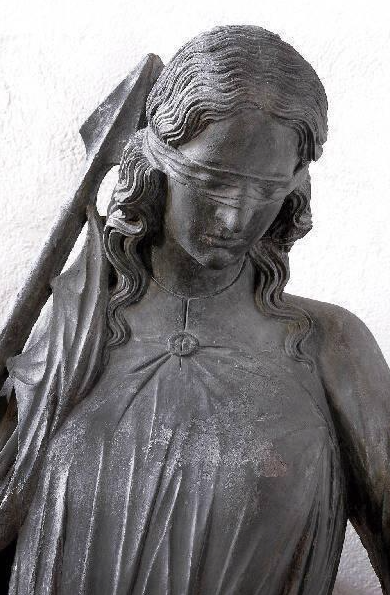
The blindfold on Synagoga was especially powerful.
It transformed a theological disagreement into a permanent Jewish characteristic.
Jewish people were represented as unable or unwilling to see the truth of their own Scriptures. Their continued reading of Torah became evidence of blindness rather than evidence of an enduring covenant community.
This artistic tradition encouraged Christians to approach Jewish interpretation with contempt.
Jews could preserve the biblical text, but Christians supposedly possessed its true meaning. Jewish voices were unnecessary because Jewish people were presumed incapable of understanding the books entrusted to them.
The image of blindness continued in preaching and Christian speech long after many people had forgotten its artistic origins.
Art Also Encouraged Caricature
Medieval and early modern Christian art sometimes portrayed Jews through exaggerated physical features, clothing, gestures, and symbols.
These images did not simply distinguish biblical figures. They could teach viewers to associate Jewish identity with greed, treachery, stubbornness, corruption, or alliance with evil.

Judas was frequently marked as Jewish in ways that separated him from the equally Jewish disciples around him.
Negative biblical characters could be made visibly Jewish, while Yeshua and His faithful followers were gradually detached from their Jewish appearance and setting.
Christian art therefore performed a strange removal.
The heroes of the New Testament became culturally Christian. Its villains remained Jewish.
This visual rewriting allowed Christians to forget that the entire Gospel story unfolded within the Jewish world.
Replacement Theology and the Deicide Charge
The accusation that Jews collectively killed God became one of the deadliest consequences of Christian anti-Jewish teaching.
Particular leaders involved in Yeshua’s death were expanded into “the Jews” as a timeless group.
Roman crucifixion faded into the background. Yeshua’s willing self-offering and the Christian teaching that His death addresses the sin of humanity were overshadowed by ethnic blame.
The deicide charge presented every generation of Jews as connected to the crucifixion.
Replacement theology strengthened this accusation. If the Jewish people had killed Messiah and lost their covenant standing, then Christian dominance and Jewish humiliation could be interpreted as a just reversal.
The church had accepted Christ and inherited the promises. The Jews had rejected Christ and inherited judgment.
That narrative was preached, painted, dramatized, and woven into public devotion.
The Blood Libel and Other Lies
Theological contempt made Christian societies more receptive to fabricated accusations.
The blood libel claimed that Jews murdered Christian children and used their blood for ritual purposes.
The accusation contradicted Jewish law, which strictly prohibits the consumption of blood, but factual impossibility did little to restrain hysteria.
Jewish communities were also accused of desecrating the Eucharist, poisoning wells, spreading disease, and conspiring against Christians.
Replacement theology did not logically require these accusations. Yet it helped create the moral imagination in which they seemed believable.
A people described from the pulpit as blind, cursed, treacherous, and hostile to Christ could be accused of almost anything.
The lie arrived in soil already prepared for it.
The Reformation Did Not End the Pattern
The Protestant Reformation challenged many forms of church authority, but it did not remove anti-Jewish theology from Christianity.
Some Reformers expected Jewish people to respond positively once Christianity was freed from what they considered Roman corruption.
When widespread conversion did not follow, disappointment could become hostility.
Martin Luther’s later writings against Jews were vicious. He advocated measures against synagogues, homes, books, rabbis, and Jewish religious life.
His language drew upon inherited Christian accusations and reinforced them for later generations.
Luther’s theological achievements do not require Christians to minimize his anti-Jewish writings. Honest history can hold both realities at once, despite humanity’s recurring desire to turn every historical figure into either a spotless hero or a cartoon villain.
From Religious Contempt to Modern Antisemitism
Modern antisemitism developed forms that were not dependent upon Christian belief.
Racial theories portrayed Jewish identity as biological and unchangeable. Nationalists treated Jews as foreign elements within the nation. Political movements accused them of controlling finance, revolution, media, or governments.
A Jewish person could convert to Christianity and still remain a target under racial antisemitism.
This marked an important change from earlier religious hostility.
Yet modern antisemites inherited a European culture already filled with anti-Jewish images, accusations, restrictions, and assumptions.
The content shifted, but many stereotypes remained recognizable.
The Jew accused of rejecting Christ could become the Jew accused of corrupting the nation. The religious outsider became the racial outsider. The supposed enemy of the church became the supposed enemy of society.
Centuries of Christian contempt did not fully explain modern antisemitism, but they supplied language, images, and habits of suspicion.
The Holocaust and the Christian Past
Nazi antisemitism was racial, political, nationalist, and genocidal.
It should not be reduced to replacement theology or described simply as medieval Christian persecution on a larger scale.
The Nazi regime attacked Christianity when Christian teaching conflicted with its ideology. Some Christians resisted Nazism and helped rescue Jewish people.
Many others accommodated the regime, supported anti-Jewish policies, remained silent, or failed to defend their neighbors.
Traditional Christian antisemitism made Nazi claims easier for many people to accept.
A society trained to see Jews as alien, dangerous, cursed, or inferior did not need to invent suspicion from nothing.
Some German Christian movements even attempted to remove Jewish influence from Christianity, reject the Hebrew Bible, and portray Jesus as non-Jewish.
This project revealed the final absurdity of replacement thinking: Christians sought to possess Israel’s Messiah while erasing the people, Scriptures, and history that made His identity intelligible.
Replacement Theology After the Holocaust
The Holocaust forced many churches to examine their theology and history.
Christian bodies began issuing statements rejecting antisemitism, collective Jewish guilt, and the claim that Jews should be presented as rejected or cursed by God.
The Roman Catholic declaration Nostra Aetate rejected the idea that responsibility for Yeshua’s death could be assigned to all Jews then living or to Jewish people today. It also stated that Jews should not be portrayed as rejected or accursed by God.
Protestant churches have likewise produced statements of repentance and reassessed their teaching about Judaism and Israel.
These developments represent important corrections.
They do not erase the past, and official statements do not automatically change what is preached in local churches.
Replacement assumptions can survive informally even where formal antisemitism has been rejected.
Replacement Theology in Churches Today
Modern Christian teaching may repeat replacement patterns without using the term.
It appears when preachers speak as though “Israel” always means the church whenever the passage contains a blessing, while it means Jewish people whenever the passage contains judgment.
It appears when Judaism is described only as legalistic, spiritually dead, or obsolete.
It appears when the Pharisees are treated as symbols of everything wrong with religion and their Jewish setting is turned into a permanent ethnic caricature.
It appears when Christians use Israel’s festivals, symbols, and Scriptures while speaking dismissively about living Jewish communities.
It appears when Jewish return to the land or Jewish survival is discussed only as evidence within Christian prophecy, without concern for Jewish people as human beings.
It appears whenever the church treats Jewish identity as a theological problem that should have disappeared.
The Difference Between Fulfillment and Erasure
Christians naturally read Israel’s Scriptures through Yeshua.
The question is whether fulfillment is understood as faithfulness to the story or cancellation of the people through whom the story came.
Yeshua’s fulfillment of Scripture should deepen Christian understanding of Israel’s calling. It should not make Israel irrelevant.
The inclusion of the nations fulfills the promise to Abraham that all families of the earth would be blessed through him. Gentile inclusion confirms the covenant’s worldwide purpose.
It does not require Abraham’s descendants to lose their identity.
The new covenant is promised in Jeremiah to the house of Israel and the house of Judah. Gentiles receive its blessings through Messiah, but they should not rewrite themselves as the only people named in the promise.
Fulfillment expands the reach of covenant mercy. Erasure changes the identities of the participants until only the church remains.
Romans 9–11 Must Remain Together
Christians sometimes quote Romans 9 to discuss election or Romans 10 to discuss faith while giving little attention to Romans 11.
Paul’s argument should be read as a whole.
He grieves over his Jewish kin. He affirms Israel’s privileges and covenant history. He explains righteousness through faith. He warns Gentile believers against arrogance. He anticipates mercy and insists that God’s gifts and calling are irrevocable.
The entire section is framed by Paul’s concern about the faithfulness of God.
If God simply abandons the people to whom He made promises, the reliability of His word becomes the central problem.
Paul’s answer does not permit Gentile triumphalism.
The church lives by mercy. It has no basis for boasting.
Better Ways to Preach the Bible
Churches can begin correcting replacement theology through careful preaching.
Pastors should name the Jewish identity of Yeshua, His disciples, Paul, and the earliest believers.
Gospel disputes should be presented within their first-century Jewish setting. “The Jews” should never be used casually as though it described every Jewish person.
The prophets should be taught as voices within Israel’s covenant life, not as Christians attacking Judaism before Christianity existed.
Promises of restoration should be allowed to retain their relationship to Israel.
Romans 11 should shape the posture of Gentile believers: gratitude, humility, reverence, and hope.
Christian preaching should also abandon the habit of using “Jewish” and “legalistic” as though they were interchangeable terms.
Better Ways to Use Christian Art and Education
Churches should examine the images used in sanctuaries, curricula, seasonal materials, and children’s education.
Does Yeshua appear recognizably Jewish?
Are His disciples presented as Jewish, or do only the villains receive Jewish markers?
Does Holy Week imagery encourage collective blame?
Are Judaism and the synagogue represented as blind, dead, obsolete, or defeated?
Historical Christian art should not necessarily be hidden. It can be taught honestly.
Images such as Ecclesia and Synagoga provide opportunities to explain how theology shaped Christian contempt and why churches must read visual traditions critically.
Education can turn inherited symbols into occasions for repentance rather than allowing them to continue teaching silently.
Repentance Requires More Than Renaming the Doctrine
Churches cannot correct replacement theology merely by avoiding the term.
They must examine the assumptions beneath their teaching.
Do Christians believe God remains faithful to His promises?
Can the church understand its identity without denying Jewish covenant history?
Can Christians confess Yeshua as Messiah without portraying Jewish people as uniquely corrupt?
Can Gentile believers receive Israel’s Scriptures without claiming ownership over Israel?
Can they stand against antisemitism even when doing so brings social or political inconvenience?
Repentance requires revised teaching, truthful history, responsible preaching, and active concern for Jewish neighbors.
The Church Does Not Support the Root
Paul’s olive-tree warning remains one of the clearest correctives to replacement theology:
“Remember: you do not support the root, but the root supports you.”—Romans 11:18, NRSVUE
Christian faith is rooted in Israel’s Scriptures, covenants, promises, prophets, Messiah, and apostles.
Gentile believers have received extraordinary mercy. That mercy should produce gratitude rather than superiority.
Replacement theology contributed to antisemitism because it taught Christians to interpret Jewish existence as failure, Jewish suffering as judgment, and Christian power as proof of divine favor.
Those ideas shaped more than theology. They shaped sermons, laws, art, institutions, and the treatment of actual human beings.
The church cannot undo that history.
It can refuse to keep preaching it.
Historical and Source Notes
The United States Holocaust Memorial Museum explains that antisemitism has repeatedly taken the form of systemic discrimination and persecution, while traditional Christian interpretations contributed to prejudices that later converged with racialized Nazi antisemitism. It also documents the continuity of anti-Jewish stereotypes across centuries of propaganda.https://encyclopedia.ushmm.org/content/en/article/antisemitism?utm_source=chatgpt.com
The Museum notes that identifying badges imposed upon Jews predated the Nazi era and had also been required by medieval bishops and other rulers. This illustrates how Jewish subordination became embedded in public policy long before modern racial antisemitism.
The paired figures of Ecclesia and Synagoga became influential symbols of Christian triumph and Jewish defeat. Historian Sara Lipton’s work, featured by the US Holocaust Memorial Museum, traces how medieval visual culture developed enduring anti-Jewish imagery rather than accurately portraying Jewish neighbors.
https://www.ushmm.org/antisemitism/podcast/voices-on-antisemitism/sara-lipton?utm_source=chatgpt.com
The Church of England’s teaching document God’s Unfailing Word describes centuries of negative Christian attitudes toward Judaism as a fertile environment for murderous antisemitism and calls Christians to repentance and active resistance to anti-Jewish stereotypes.https://www.churchofengland.org/media/press-releases/church-england-teaching-document-calls-repentance-over-role-christians?utm_source=chatgpt.com
The Second Vatican Council’s Nostra Aetate rejected collective Jewish responsibility for Yeshua’s death and stated that Jewish people should not be portrayed as rejected or cursed by God.https://www.vatican.va/archive/hist_councils/ii_vatican_council/documents/vat-ii_decl_19651028_nostra-aetate_en.html?utm_source=chatgpt.com
The US Holocaust Memorial Museum distinguishes Nazi racial ideology from earlier Christian anti-Judaism while showing how traditional Christian prejudices provided a cultural foundation upon which modern antisemitism could build. It also documents attempts by the pro-Nazi “German Christians” to remove the Hebrew Bible and Jewish identity from Christianity.https://encyclopedia.ushmm.org/content/en/article/the-german-churches-and-the-nazi-state?utm_source=chatgpt.com

Comments